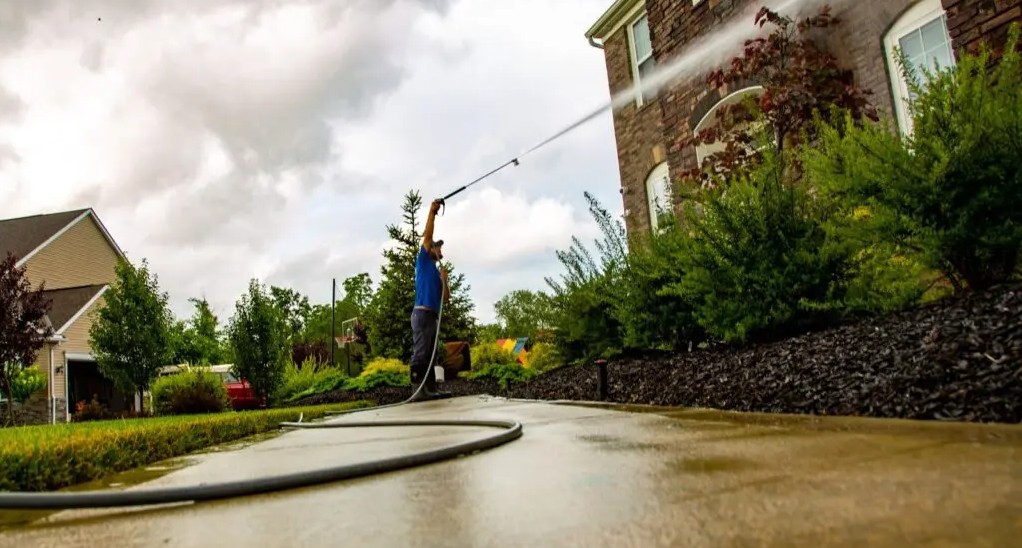
Planning to give your home a fresh coat of paint? Before the first drop of paint ever hits your siding, there’s one step pros never skip: pressure washing. It’s the secret to a clean surface, better paint adhesion, and a longer-lasting finish. Even if you’re hiring a professional painter, pressure washing your house first sets the stage for a flawless job. To ensure optimal results, always remember to Pressure Wash Your House before painting.
Here’s how to Pressure Wash Your House in 5 simple, painter-approved steps:
Step 1: Prep Your Space Like a Pro
Before you even fire up the washer, take a moment to prep:
- Close all windows and doors.
- Cover or move outdoor furniture, plants, and décor to protect them from overspray.
- Turn off power to exterior outlets and cover them with plastic.
- Inspect your siding for any cracks or damage. Pressure washing can make existing issues worse, so patch those up first.
Painter’s tip: Think of this like setting the stage. Clean prep equals clean paint later.
Step 2: Choose the Right Pressure Washer and Nozzle
Not all pressure washers are created equal. For home exteriors:
- A gas-powered pressure washer with at least 2,500 PSI is ideal for most homes.
- Use a 25- or 40-degree nozzle to avoid damage. These provide a wide spray that’s strong enough to clean but gentle on siding.
Avoid the 0-degree “pinpoint” nozzle—it’s powerful but can easily gouge wood, crack vinyl, or strip paint unintentionally.
Step 3: Apply Cleaning Solution
You can use a store-bought siding cleaner or make your own with water, dish soap, and a splash of bleach (if there’s mold or mildew). Attach a detergent nozzle and:
- Apply the cleaner from bottom to top to prevent streaks.
- Let it sit for 5–10 minutes, but don’t let it dry.
Painter’s tip: Cleaning solution isn’t just about looks—it removes chalky residue, dirt, and grime that paint won’t stick to.
Step 4: Rinse with Care
Now comes the fun part. Switch back to your spray nozzle (25–40 degrees) and rinse:
- Work from top to bottom, overlapping each pass.
- Keep the wand a few feet from the siding, and don’t blast one spot too long.
If you’re washing a second story, use an extension wand rather than a ladder—it’s safer and easier on your back.
Step 5: Let It Dry Completely
This is the step most people rush. Let your house dry for at least 24 to 48 hours before painting. Trapped moisture can lead to blistering, bubbling, or peeling later down the road.
Painter’s tip: A moisture meter is a great investment if you want to be 100% sure your surface is paint-ready.